
Summarize this article with:
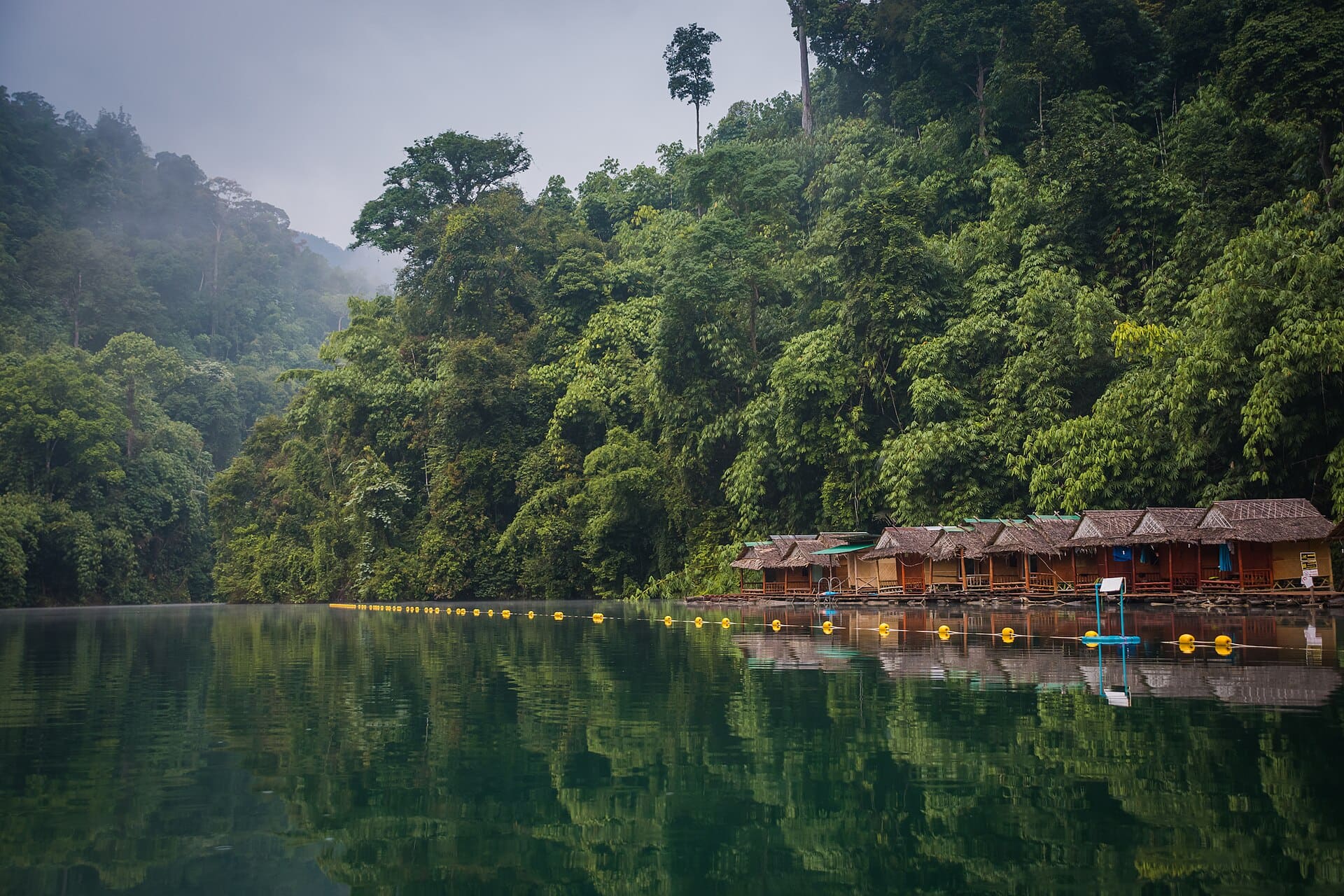
Khao Sok sits in the south of Thailand, in the districts of Phanom and Ban Takhun. It is one of the sites of the Khlong Saeng – Khao Sok forest complex, a group of 12 protected areas covering 5,316 km². Most visitors know it for two things: walks under the rainforest canopy, and a reservoir dotted with limestone peaks.
This page is the overview. It covers the fees and hours as published in September 2026, the way the park is split in two, the seasons and how to get there. The lake has its own guide, and sleeping on the water is covered in the floating bungalows guide.
In the undergrowth
The forest you actually walk through
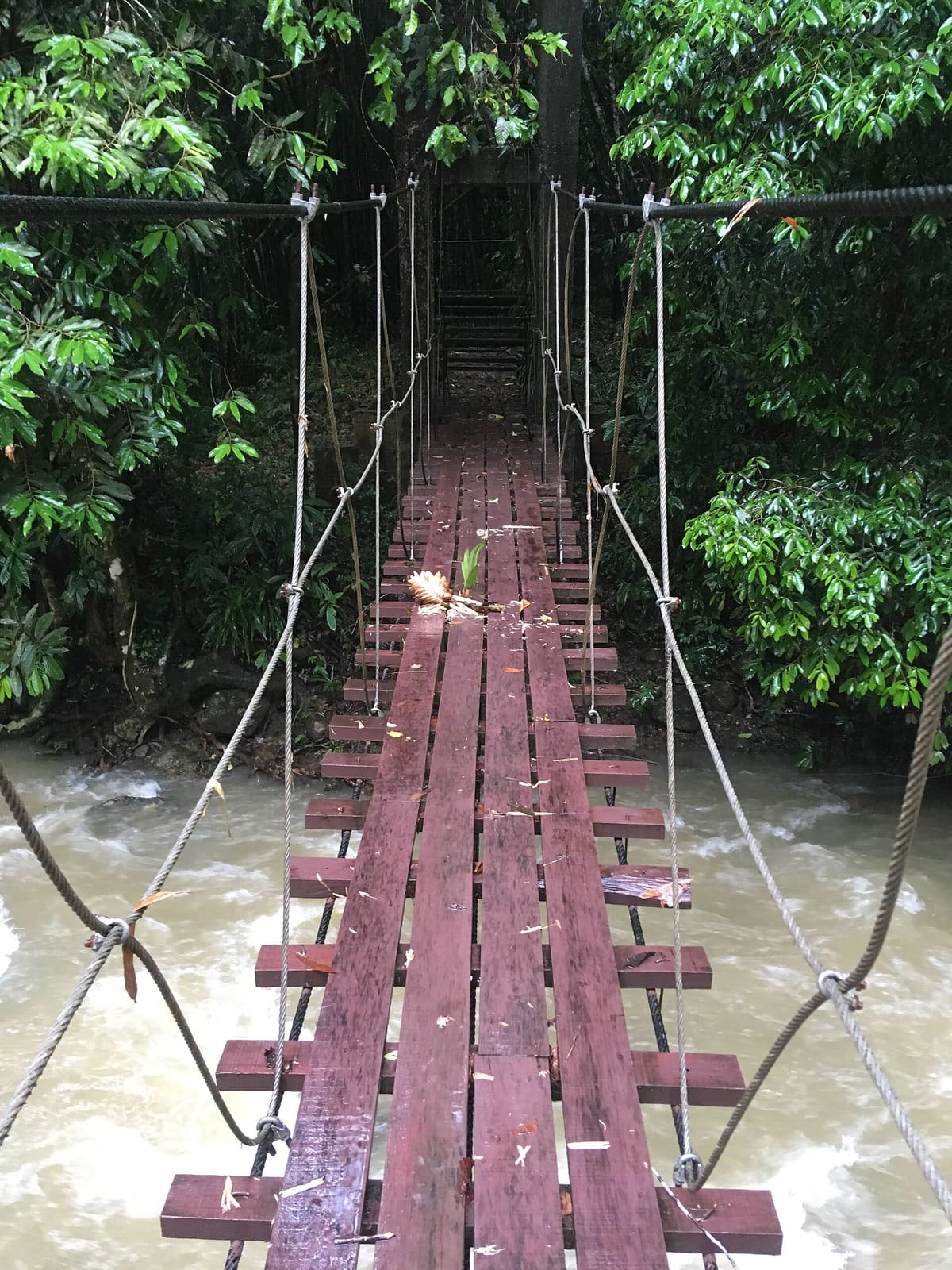
Most photographs of Khao Sok are taken from the water. The land side of the park is a different room: no panorama, no horizon — just the trail in front of you, a green ceiling, and a river you hear before you see it.
That is also the honest way to read the park. The published opening hours are an approximation that varies by zone and season, and beyond the first stretch of trail towards the Bang Hua Raet waterfall — roughly 3 km from the park headquarters — a guide is required, as it is for every long trail, night safari and cave visit.
So the walk is short, slow and close. What follows is what the forest floor gives you instead of a view.
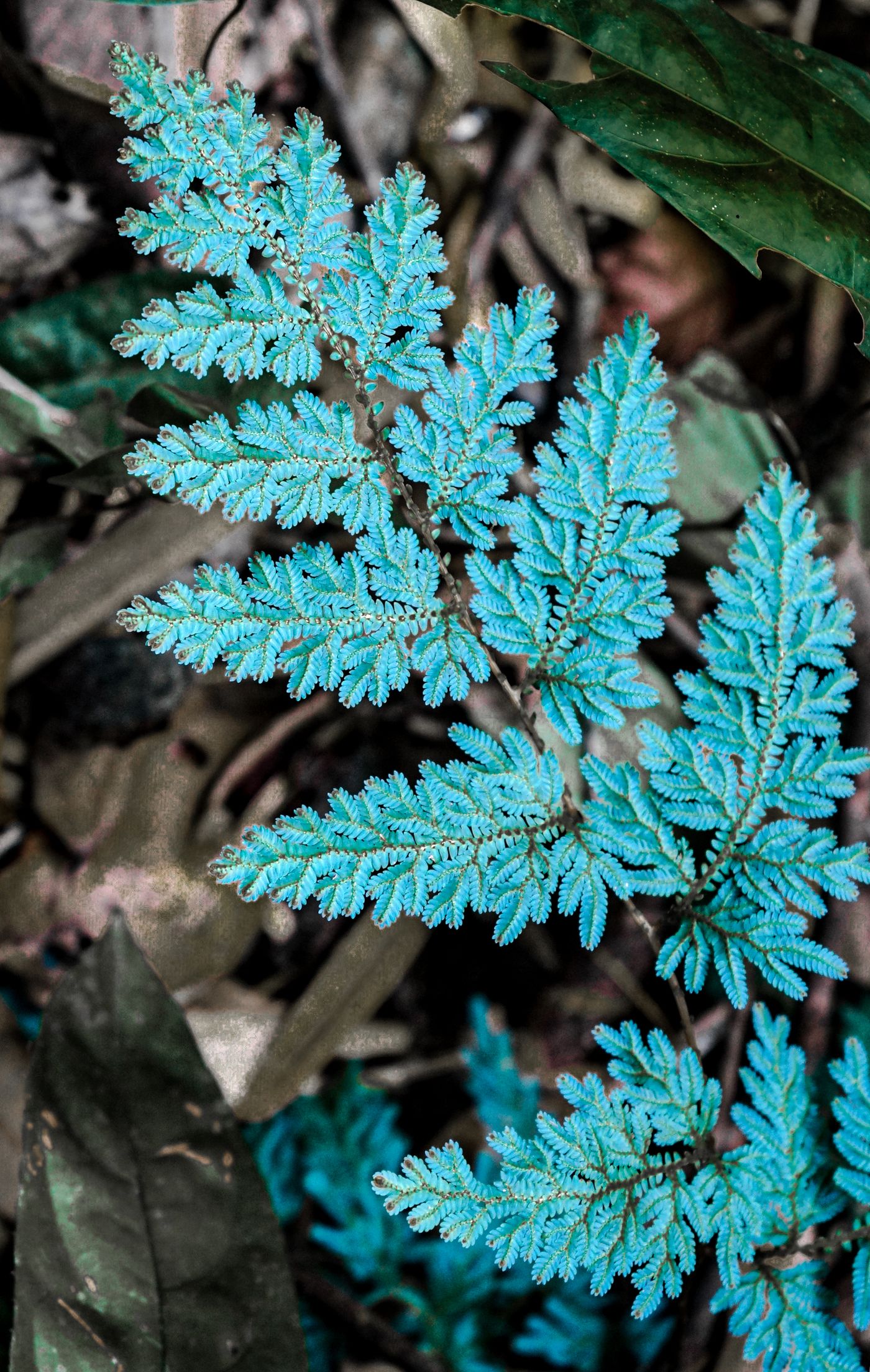
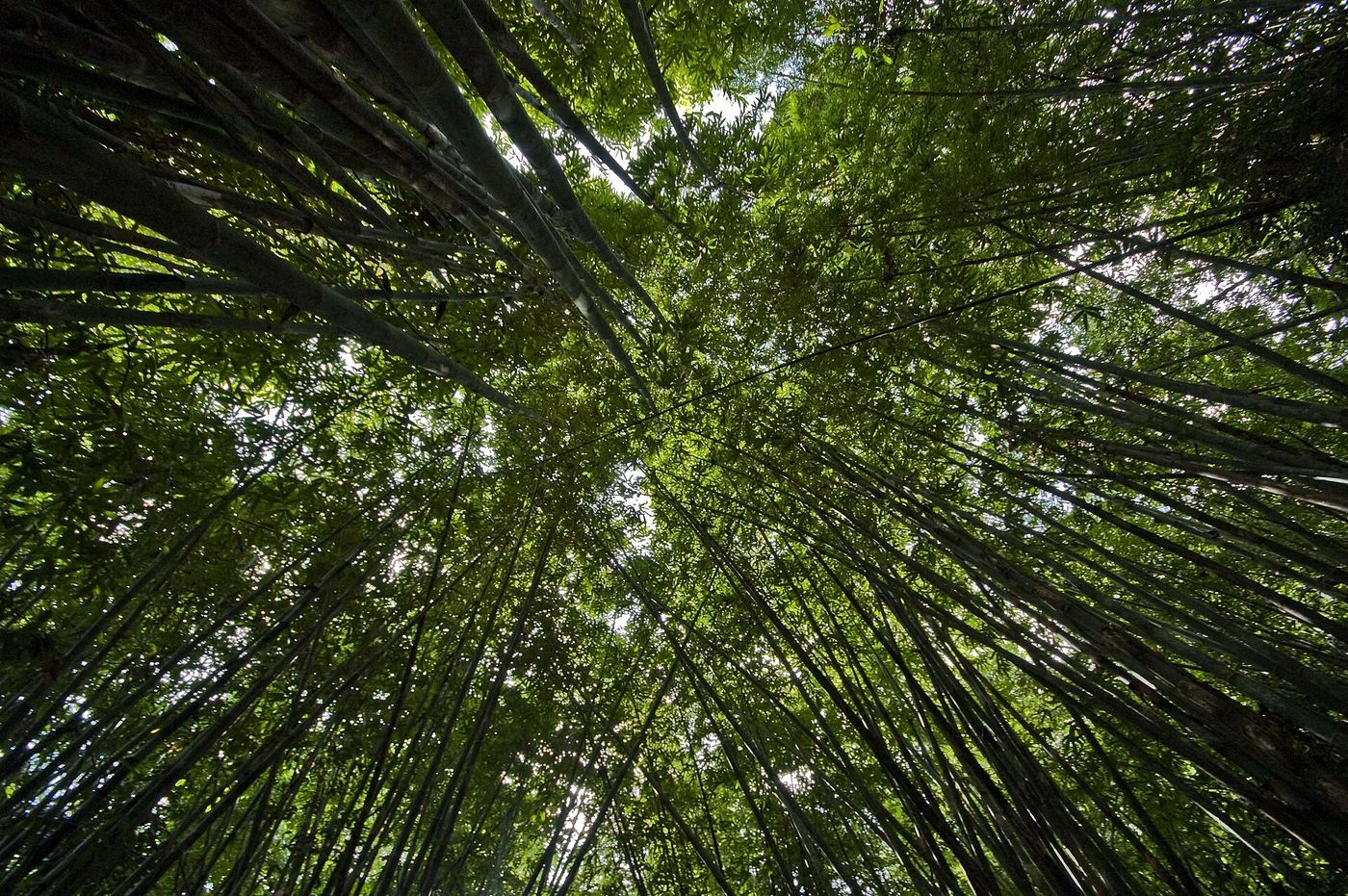
Three things the canopy does to a walk
It shortens your sight
You stop scanning for animals and start reading the ground: tracks in wet leaf litter, a shape on a branch, movement at knee height.
It raises the volume
Voice, footsteps, a camera shutter — all of it sounds louder than it should, which is why the animals hear you long before you hear them.
It holds the humidity
Nothing dries in here. The forest keeps its heat and its damp through the day, which is why the hours right after sunrise are the easiest walking.
What the undergrowth hides
The park's own reference lists the mammals you would hope for: Asian elephant, gaur, sambar deer, sun bear, Malayan tapir, crab-eating macaque, lar gibbon, serow, mousedeer, porcupine, marbled cat, wild boar and dhole. It also says plainly that wildlife is difficult to observe under the canopy — and that is the honest expectation to travel with.
What you can count on is the small scale: the insects and amphibians that live where the light never reaches the ground. The lake side of the park is where the forest stands in water instead — that is Cheow Lan Lake, reached through its own entrance.
Khao Sok National Park at a glance
| Status | National park created in 1980, the 22nd in Thailand |
|---|---|
| Area | 739 km², in the districts of Phanom and Ban Takhun, Surat Thani province |
| Entrance fee | Foreigners: 300 THB adult, 150 THB child, valid 24 hours, paid in cash. Fees can change, so confirm on arrival. |
| Opening hours | Roughly 8:00 to 17:00 all year. Hours vary by zone and season, and one source gives 16:30 as closing time. |
| Entrances | Two: the land side (headquarters and village) and the lake side, about 65–67 km apart by road |
| Location | Route 401 between Surat Thani and Takua Pa, park entrance at kilometre 109 |
| Temperatures | Averages between 22 and 36 °C all year |
| Seasons | Dry from January to March or April; wet from late April to early December, with the heaviest rain from May to October |
One park, two entrances
Khao Sok is not a single gate. The land zone is centred on the park headquarters and the village of Khao Sok: this is where the forest trails, the river and most guesthouses are. The lake zone is reached from a different entrance, roughly 65 to 67 km away by road, and covers Cheow Lan Lake.
Each zone has its own entrance fee and one visit does not cover the other. Plan them as two separate outings, or as one land day followed by a lake day. The lake side, its pier costs and the boats are described in the Cheow Lan Lake guide.
Entrance fee, boats and guides
The figures below are the ones seen in September 2026. National park fees in Thailand are set by the authorities and can change, so treat them as a guide and confirm at the ticket office. Payment is in cash.
The lake is a separate fee zone: you pay a new entrance fee at the pier, plus a small pier cleaning charge of about 40 THB per person.
| Item | Price | Note |
|---|---|---|
| Foreign adult | 300 THB | Ticket valid for 24 hours |
| Foreign child | 150 THB | Ticket valid for 24 hours |
| Thai adult / child | 40 THB / 20 THB | Thai nationals |
| Long-tail boat at the lake | From 1,800 THB | Official park rate for renting the boat, as published by the DNP |
| Hiking guide | About 800–1,000 THB (half day), 1,200–1,500 THB (full day) per person | A rough range reported by a travel site, not a fixed tariff |
Walking in the park
A first stretch of trail, up to the Bang Hua Raet waterfall (about 3 km from the headquarters), can be walked without a guide. Beyond that point a guide is required. Longer hikes, night safaris and cave visits all need one.
Two caves show how the weather shapes the park. Nam Talu cave is closed in the rainy season because of the risk of sudden rising water. Bang Hman cave needs a guide and is off limits if rain is forecast, because of a flood risk of 5 to 7 metres. Ask at the headquarters what is open on your dates.
Wildlife and plants
The park reference lists Asian elephants, gaur, sambar deer, Malayan sun bears, Asiatic black bears, Malayan tapirs, crab-eating macaques, white-handed gibbons, serow, mouse-deer, porcupines, marbled cats, wild boar and dholes, as well as hornbills, among them the great hornbill.
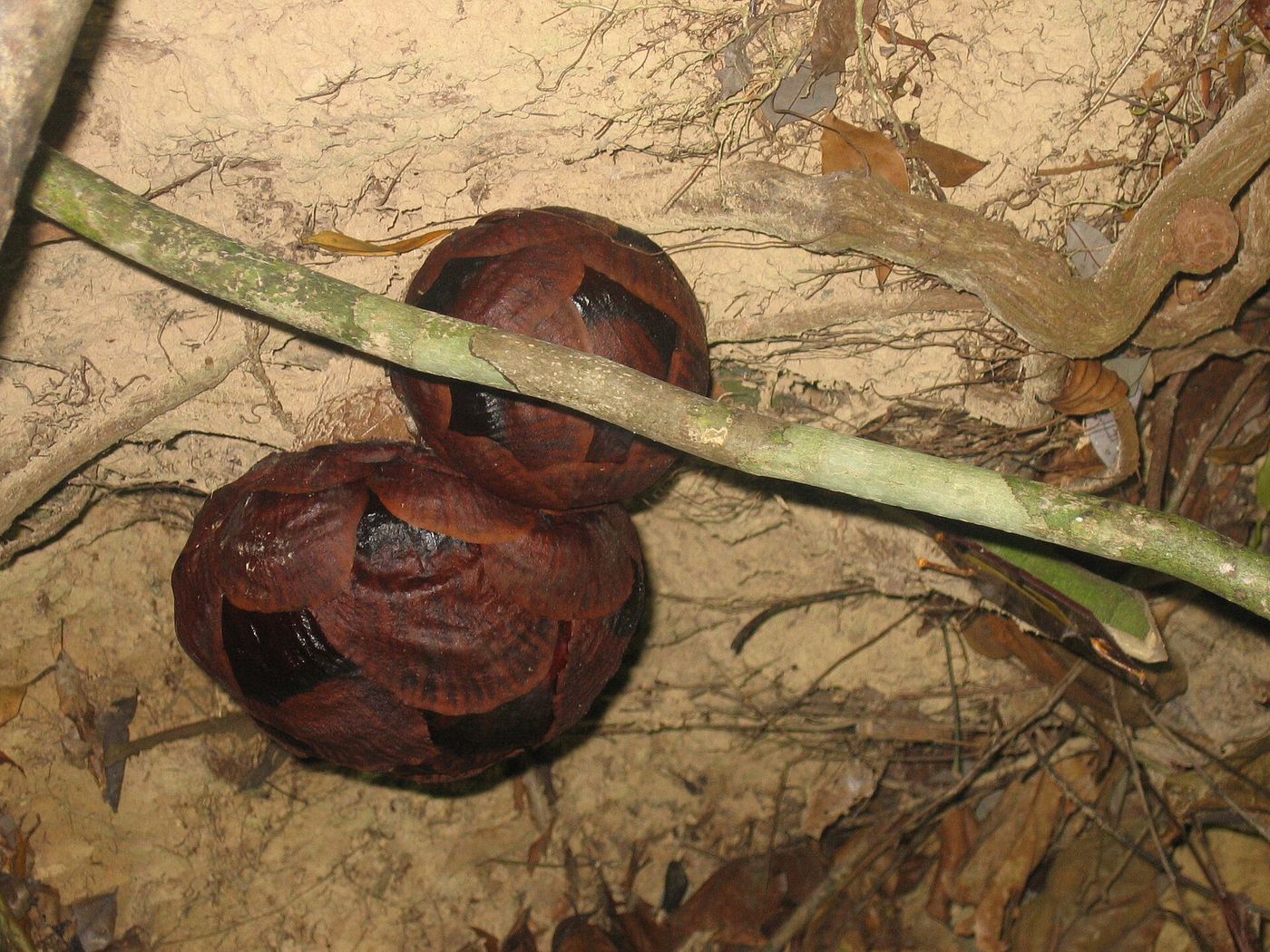
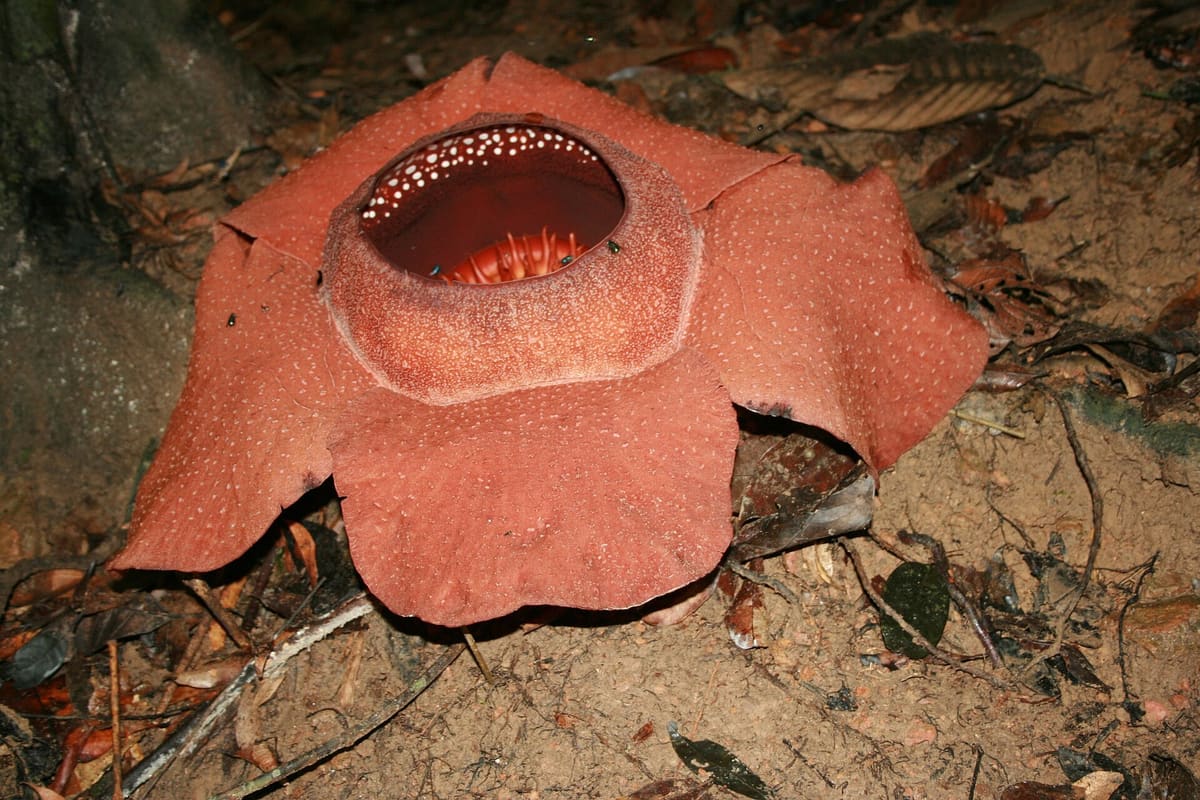
A list is not a promise: animals are hard to see under the canopy, and no tour or guide can guarantee a sighting. The plant most visitors ask about is Rafflesia kerrii, the largest flower in the world. It grows along the longer trails and blooms unpredictably, mostly from January to March or April, and it is never guaranteed.
Best time to visit
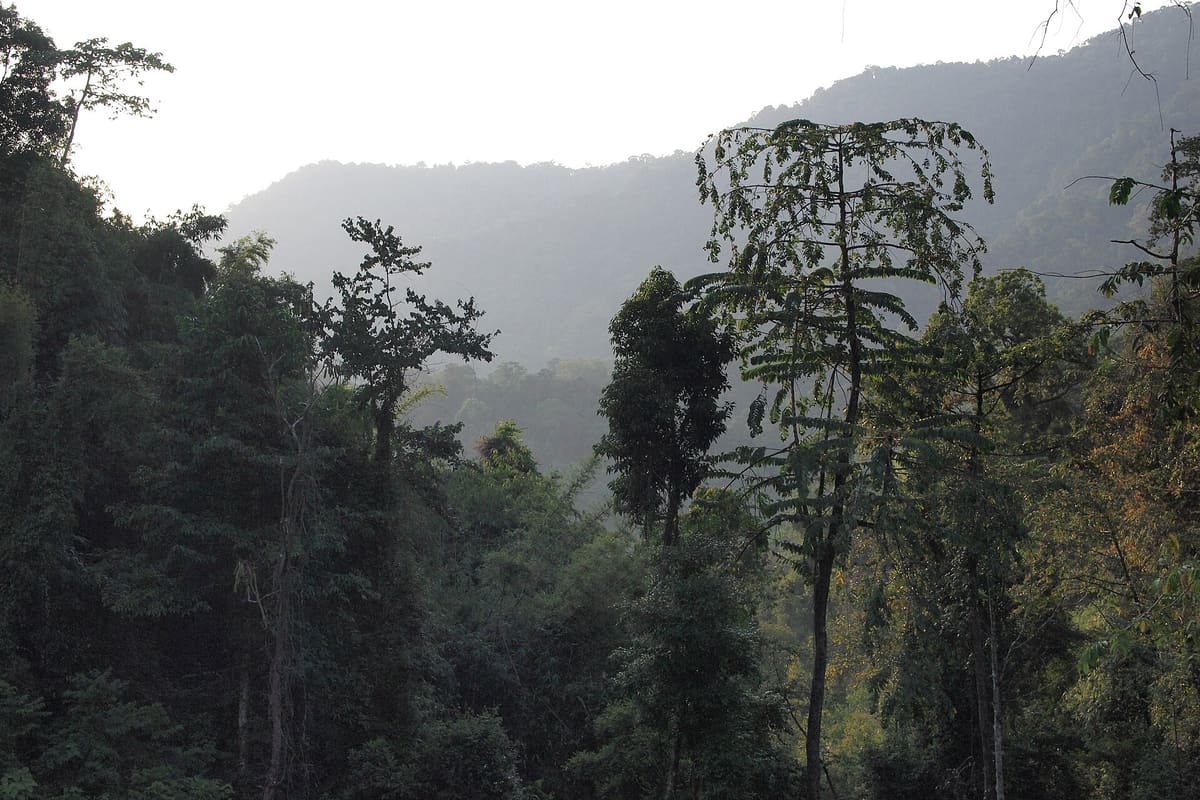
The dry season, from January to March or April, gives the most walkable trails. The rainy season runs from late April to early December, with the heaviest rain from May to October. Temperatures barely change through the year, averaging 22 to 36 °C.
The quietest, and cheapest, months are May, June, September and October. That is also when caves can be closed, so decide what matters most: fewer people or full access.
| Month | Average high / low (°C) |
|---|---|
| January | 32 / 22 |
| February | 32 / 22 |
| March | 33 / 23 |
| April | 33 / 24 |
| May | 32 / 24 |
| June | 31 / 24 |
| July | 31 / 24 |
| August | 31 / 24 |
| September | 30 / 23 |
Getting to Khao Sok
The village of Khao Sok lies on Route 401, and the park entrance is at kilometre 109. The park sits on the road between Phuket and Koh Samui, which makes it a natural stop between the two coasts.
Times below are typical ranges reported by transport and lodging sites; the real duration depends on traffic and on where you leave from.
| From | Distance and time | Notes |
|---|---|---|
| Surat Thani (town or airport) | About 145 km, 1 h 45 to 2 h 30 by minivan | 370 THB (town office) to 400 THB (airport) per person |
| Krabi | About 160 km, 2 h 30 to 3 h 30 by minivan or taxi | Shared bus or minivan 320–450 THB |
| Phuket | 4 to 5 h by shared minivan | A private transfer is the most comfortable option |
| Bangkok | About 780 km, 8 to 10 h by road | Or train to Surat Thani (Phun Phin station), then a bus or minivan |
Where to sleep
Most visitors stay either in the village on the land side or on the lake. The where to stay guide compares the options, and the floating bungalows guide explains the lake stays. For the wider picture of the region, Thailand Voyager's Khao Sok destination page sets the park in context.
Check before you go
Fees, hours and cave access are set by the park and change with the season and the weather. Confirm them at the ticket office, and follow the instructions of park staff and guides. This site does not give visa, health or safety rules: use the official Thai government and your own government's travel advice for those.
Last verified 29 September 2026
Sources and further reading
- Thai National Parks: Khao Sok National Park
- Department of National Parks (DNP) portal
- Out Thailand: Khao Sok National Park guide
- Khao Sok: when to visit
- Thailand Addict
- Khao Sok National Park tours: how to visit
- Phuket Ferry: route to Khao Sok from Surat Thani
- Khao Sok Riverside Cottages: Krabi to Khao Sok
- Khao Sok Travel
Frequently asked questions
In September 2026, foreigners paid 300 THB for an adult and 150 THB for a child, on a ticket valid for 24 hours, in cash. Thai nationals pay 40 THB (adult) and 20 THB (child). Confirm at the ticket office, as fees can change.
No. The lake is a separate fee zone with its own entrance, roughly 65–67 km from the land zone by road. At the lake pier you pay a new entrance fee plus a small cleaning charge of about 40 THB per person.
Published hours are roughly 8:00 to 17:00 all year, but they vary by zone and season and the park does not give one reliable timetable. One source lists 16:30 as closing time. Check locally.
Not for the first stretch of trail, up to the Bang Hua Raet waterfall (about 3 km from the headquarters). Beyond it, and for all longer hikes, night safaris and cave visits, a guide is required.
January to March or April is the driest and best for trails. May, June, September and October are the quietest and cheapest months, but rain can close caves such as Nam Talu.
It is never guaranteed. Animals are hard to spot under the canopy, and the Rafflesia kerrii blooms unpredictably, mostly from January to March or April.
About 145 km from Surat Thani (1 h 45 to 2 h 30 by minivan), about 160 km from Krabi (2 h 30 to 3 h 30) and 4 to 5 hours from Phuket by shared minivan.